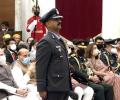
Major Syed Moiz Abbas Shah, 37, was killed on Tuesday in a clash with the Taliban militants in the Sararogha area of South Waziristan near the Afghan border, according to a statement by the Inter-Services Public Relations (ISPR), the media wing of the army.
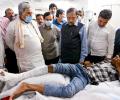
IPL champions Royal Challengers Bengaluru announced a compensation of Rs 25 lakh each to the families of those who lost their lives in the June 4 stampede.

Defence Minister Rajnath Singh says India achieved all objectives of Operation Sindoor, emphasizing that escalating the situation to war with Pakistan was not the aim. He highlighted India's fight against cross-border terrorism and the successful exposure of Pakistan's air defense system.
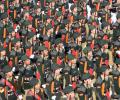
The Army Day Parade this year will see participation of an all-girl marching contingent from the National Cadet Corps (NCC) and showcasing of four thematic tableaux, including one based on the force's Mission Olympics Wing.
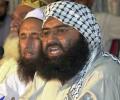
In a viral video uploaded to a YouTube channel on Tuesday, JeM commander Ilyas Kashmiri can be heard fuming over the Indian attack that killed the family members of Azhar and also bragging about fighting in neighbouring countries for Pakistan.
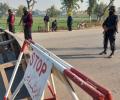
At least 12 persons, including four children, were killed and 30 injured as two explosive-laden vehicles rammed into the boundary wall of the main cantonment in Bannu in northwest Pakistan on Tuesday while the army personnel neutralised at least six terrorists.
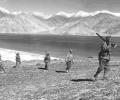
As India and China continue to face off across the Himalayas six decades later, the echoes of that earlier conflict remain unmistakable. The core of China's sensitivity lies not in maps or mountain passes, but in its perception of sovereignty over Tibet, points out Dr Kumar.
The family of an Army jawan, Kapil, recounts the brutal assault he endured at a toll plaza in Meerut, Uttar Pradesh. They describe the attack and the injuries he sustained, while police investigate and make arrests.
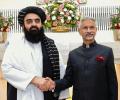
'Pakistan is uncomfortable with the Indian presence in Afghanistan. They want the Taliban to ensure that there is no Indian presence in Afghanistan.'

'Pakistan wanted India out of Afghanistan to which again the Taliban told Pakistan to take a walk.' 'Six months after they came back to power in 2021 India was back in Afghanistan at the request of the Taliban.' 'The Taliban realised that India has no agenda of its own in Afghanistan.'
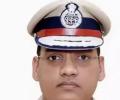
The Haryana government transferred Rohtak Superintendent of Police Narendra Bijarniya after an IPS officer's suicide and allegations of caste-based discrimination.

Ladakh Director General of Police S D Singh Jamwal on Saturday said forces were compelled to open fire on protesters, else the entire Leh would have been burned to the ground.
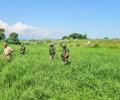
'Why have we failed to address the issue of ensuring a requisite buffer zone in J&K, given that cross-border links of some J&K politicians are known?', asks Lieutenant General Prakash Katoch (retd).

Heavy rains exacerbate the flood situation in Punjab, leading to 37 deaths and widespread crop damage. Rescue and relief operations are underway as authorities issue alerts and provide assistance to affected populations.

Saudi Arabia and Pakistan have signed a 'Strategic Mutual Defence Agreement', pledging that any aggression against either nation would be treated as an attack on both.
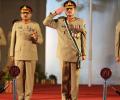
India has issued a strong warning to Pakistan against continuing its 'hateful' rhetoric and any potential misadventures, following recent nuclear threats and remarks from Pakistani leadership.
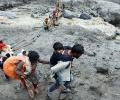
Nine-year-old Devanshi was among the hundreds of pilgrims who had gathered in Chositi for the last leg of the yatra to Machail Mata temple when tragedy struck on Thursday. Buried under mud and debris when a Maggi-point shop was hit by flash floods, she emerged hours later, rescued by her uncle and other villagers.

Security has been increased in Uttar Pradesh districts bordering Nepal following violent protests in Nepal over a ban on social media. Authorities are monitoring the situation and have increased patrols and surveillance.

As night fell over Chositi village, rescuers worked frantically and pulled out 167 people from under mounds of rubble. Of these, 38 are in a serious condition, officials said. The death toll went up steadily as the day progressed and there were fears it could rise further.
The state health department teams are conducting door-to-door surveillance in Badhal village, and the medical teams present in the district are monitoring the situation closely. The Medical experts have advised residents not to panic.
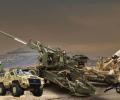
'India has the capital to invest in defence production.' 'With clear timelines and commitments, private industry can deliver surge capacity effectively.'
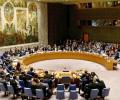
Pakistan and China have submitted a joint bid at the UN Security Council to designate the Balochistan Liberation Army (BLA) and its suicide wing - Majeed Brigade - as a terrorist entity under the Council's 1267 Al Qaeda Sanctions Committee.

A Pakistan that is more secure in its relations with the US is also one that might well wish to indulge in another cross-border misadventure.

The air raids struck areas including the outskirts of Brital and Nasiriyah towns in the Bekaa Valley, Tallet al-Sunduq, Jarmak in Jezzine, and the Mahmoudiya and Khardali regions.
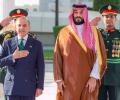
'Saudi-Pak defence pact is to anchor the defence and security of Saudi Arabia and not Pakistan, per se, with Islamabad being the junior partner.'

At least 19 people were killed and dozens injured on Monday as violent protests by youths rocked the Nepalese capital and certain other areas over the government's decision to ban social media sites, prompting authorities to deploy the army in Kathmandu to control the situation.

A search operation by a joint team of security forces is underway to track down three Pakistan-based Jaish-e-Mohammad (JeM) terrorists in a forested area of Udhampur district in Jammu and Kashmir on Friday, officials said on Friday.
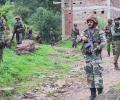
The Indian Army has increased its operational footprint in the Jammu region, including the strategic occupation of the upper reaches of the Pir Panjal range, a senior officer said. The army is playing a pivotal role in military-civilian coordination in creating a stable environment in the region, the officer said, adding that the force will continue its efforts to promote peace, security, and development in the area.

'There are times when India should stand up without hesitation and voice its indignation over the US' pressure tactic. This is one such moment,' asserts Ambassador M K Bhadrakumar.

India Test captain Shubman Gill expressed anguish over the large-scale devastation caused by floods in his home state of Punjab due to incessant rainfall.

Relentless heavy rain led to a landslide on the route to the Mata Vaishno Devi shrine atop the Trikuta hill on Tuesday afternoon, killing at least five people and injuring 14, officials said.
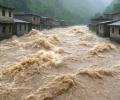
A devastating flashflood in the Kheer Ganga river on August 5 demolished nearly half of Dharali -- the key stopover en route to Gangotri with many hotels and homestays, and neighbouring Harsil, where an Army camp bore the brunt of the flood fury, barely giving time to the victims to run to safety.
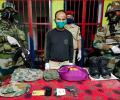
The Centre on Monday decided to extend the ban imposed on the National Socialist Council of Nagaland-Khaplang [NSCN-K)] along with all its factions, wings and front organisations for five more years due to its involvement in activities prejudicial to the sovereignty and integrity of India.
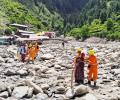
Authorities continue evacuating stranded pilgrims from areas around Dharali village in Uttarkashi, focusing on air rescue and relief operations due to damaged roads. Chief Minister Pushkar Singh Dhami is overseeing the efforts, with central government support.

There has never been a moment in India's history when it has been so adrift in the world, so confused about what it stands for and against and so humiliated, asserts Aakar Patel.

Prime Minister Narendra Modi addressed a gathering in Dhar, Madhya Pradesh, praising Indian soldiers and promoting the use of 'Swadeshi' goods. He also launched health and nutrition campaigns aimed at women and children.

Defending champions NorthEast United FC secured a convincing 3-1 victory over Malaysian Armed Forces FT in their opening Group E match of the Durand Cup at the Jawaharlal Nehru Stadium in Shillong on Saturday.
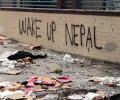
As anti-establishment protests led by Nepal's Gen Z continue across the country, youth leaders at the forefront of the demonstrations have stated that the widespread corruption and political stagnation were the core reasons behind their mass mobilisation against the government.

Prime Minister Narendra Modi raised concerns about cross-border terrorism with Chinese President Xi Jinping, advocating for India-China cooperation to combat the threat. The discussion occurred during the SCO Summit amidst efforts to rebuild bilateral relations after a border standoff.
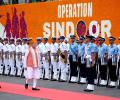
The bilingual -- Hindi and English -- invitation cards for I-Day anniversary celebrations carry this image on the top right corner of the invite, while the silhouetted image of the Chenab bridge, the world's tallest railway arch bridge, sits at the lower side of the cards, which have largely being issued online via 'Aamantran' website of the Ministry of Defence.
